Direct 24VDC to 24VAC inverters are ideal for devices that operate on a fixed 24V AC level or for compact, low-power applications. This guide highlights five practical choices for hobbyists and professionals seeking compact, reliable 24V to 24V or 24V to 110/120V conversion. Each product is suited for different loads, from small electronic devices to modest craft or workshop equipment. Read on to compare use cases, strengths, and limitations to pick the right inverter for your needs.
Buying quick view
Below is a quick reference table of the five selected products, focusing on core use cases and suitability.
| Product | Input | Output | Best For | Notes |
|---|---|---|---|---|
| Lufasa DC-AC 100W Bridge-Type Inverter | 24V DC | AC 24V | Compact projects needing 24V to 24V output | 50 Hz; small power ceiling |
| Teyleten Robot DC 6-24V to AC Inverter Module | 6-24V DC | AC 6-24V | Low-power loads like motors and pumps | Limit: current within 2A peak; adjust resistor for 4–12V variant |
| lopmou DC-AC 100W Inverter | 24V DC | AC 24V | Compact 24V to 24V use | Similar power to Lufasa; 50 Hz |
| SUNWHEEL 500W 24V Pure Sine Wave Inverter | 24V DC | AC 110V/120V | Higher-power loads with clean sine wave | Pure sine wave; dual outlets; LCD not specified |
| WZRELB 1000W Power Inverter 24V DC to 110V/120V | 24V DC | AC 110V/120V | Backup power and camping/home off-grid | Modified sine wave; LED display |
Lufasa DC-AC 100W Bridge-Type Inverter

Features: DC-AC 100W Bridge-Type Inverter Power Supply Module Voltage Converter DC 24V to AC 24V 50HZ.
Best for: Small, space-limited projects that require a 24V DC input and a 24V AC output. Suitable for hobby electronics, DIY off-grid experiments, or compact load testing where compact form and straightforward wiring matter.
Limitations: Limited to 100W; not ideal for high-power devices or long-duration loads. Efficiency and voltage regulation are typical for entry-level inverters, so plan for modest start-up surges.
Teyleten Robot DC 6-24V To AC Inverter Module

Features: Low-power inverter circuit board; input DC 6-24V; output AC 6-24V; 50Hz; instantaneous current must not exceed 2A; operating current must not exceed 1A. Can drive synchronous motors, AC air pumps, contactors, and similar equipment.
Best for: Projects requiring adjustable low-voltage AC outputs to run small motors or pumps without a dedicated AC supply. The module is well-suited for experimental setups or educational kits.
Limitations: Current and voltage are restricted; not suitable for heavy loads or continuous high-power operation without careful current management. Requires resistor tuning for certain voltage configurations (4–12V scenario).
lopmou DC-AC 100W Bridge-Type Inverter
Features: DC-AC 100W Bridge-Type Inverter Power Supply Module Voltage Converter DC 24V to AC 24V 50HZ.
Best for: Budget-conscious users needing a compact 24V to 24V inverter for small electronic projects or as a test platform.
Limitations: Similar to other 100W options; ensure devices connected do not exceed 100W, and monitor heat during operation.
SUNWHEEL 500W 24V Pure Sine Wave Inverter
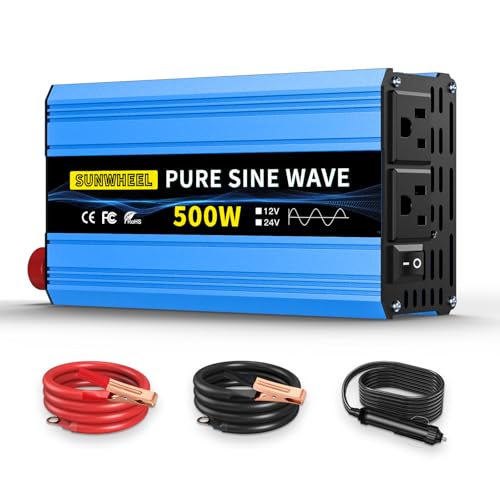
Features: 500W 24V pure sine wave inverter; output 110V/120V; peak power 1000W; 24V system for reduced current; compact and portable with LCD display.
Best for: Higher-power devices and sensitive electronics that benefit from a clean sine wave, such as laptops, TVs, or small appliances in off-grid setups or vehicles.
Limitation: Higher power means heavier unit and higher cost; ensure your battery bank can sustain the 24V input under load.
WZRELB 1000W Power Inverter

Features: 1000W continuous/2000W peak modified sine wave inverter; 24V DC input to 110V/120V AC; LED display; dual outlets; soft starter; efficient operation up to 90%.
Best for: Backup power or off-grid applications where a robust, moderate-wattage inverter is needed to run multiple devices at once.
Limitations: Modified sine wave is not ideal for some sensitive electronics; verify device compatibility before use. The unit includes a soft-start but still delivers a surge that may affect ultra-sensitive gear.
Buying Guide
Key purchase considerations help match an inverter to your load profile and installation constraints.
- Output waveform: Choose pure sine wave for sensitive electronics; modified sine wave is acceptable for many simple devices and motors but may cause hum or interference.
- Power rating: Match continuous wattage to your typical load; consider surge or startup power for motors and pumps.
- Voltage compatibility: Ensure the output voltage matches your devices and the input voltage is a stable 24V source with adequate capacity.
- Efficiency and heat: Higher efficiency reduces heat and battery drain; ensure adequate cooling for longer operation.
- Protection features: Look for overcurrent, short-circuit, and thermal protection; many units include soft-start to reduce inrush.
- Physical considerations: Size, weight, and mounting options matter for vehicle or cabinet installations; 35mm DIN-rail mounting is common for some models.
FAQ
- What is the difference between pure sine wave and modified sine wave inverters?
Answer: Pure sine wave inverters output a smooth AC waveform suitable for sensitive electronics, while modified sine wave inverters produce a stepped waveform that may cause inefficiencies or interference in some devices. - Can I run a 24V DC to 110V AC inverter in a vehicle?
Answer: Yes, many inverters are designed for vehicle use and accept a 24V DC source, but verify the vehicle’s battery capacity and startup surge requirements. - Is a higher wattage inverter always better?
Answer: Not necessarily. Choose a wattage that matches your continuous load plus a margin for startup spikes; oversizing adds cost and weight without benefit for small loads. - What safety features should I look for?
Answer: Overcurrent protection, short-circuit protection, thermal protection, and a soft-start feature help protect devices and the inverter itself. - Do these inverters require batteries or capacitors?
Answer: Most 24V inverters rely on a suitable 24V battery bank or a DC source capable of delivering stable current; some modules are designed for direct DC input in lab setups but typically require a power source. - Can I use these to run a CPAP or small medical device?
Answer: It depends on the device’s start-up power and waveform requirements; pure sine wave inverters are generally safer for medical devices.