When you need reliable 240V power with a dedicated 30A outlet, these generators are designed to run essentials during outages or off-grid adventures. The top picks here are selected for clear 240V capabilities, RV compatibility, and practical runtime. Best suited for homeowners needing transfer-switch compatibility, campers and RV owners, and small contractors needing portable, dual-fuel options.
| Product | Outlets (Main 30A) | Fuel Options | Best For |
|---|---|---|---|
| Westinghouse 6500 Watt Dual Fuel | TT-30R 30A, L14-30R 30A, 5–20R 120V | Gasoline / Propane | Home backup with transfer switch readiness |
| Westinghouse 6600 Peak Watt | TT-30R 30A, L14-30R 30A, 5–20R 120V | Gasoline | Prime backup with extended run time |
| ComJoy 5500W Peak Inverter | L14-30R 120V/240V 30A, 5-20R 120V | Gasoline | Portable RV and high-demand DC/USB charging |
| Westinghouse 4650 Peak Dual Fuel | L5-30R 30A, TT-30R 30A, 5-20R 120V | Gasoline / Propane | Light to mid-duty load with RV readiness |
| WEN 8000-Watt Dual Fuel | Includes standard 120V/240V configuration; RV-ready options vary by model | Gasoline / Propane | Higher power tasks with transfer-switch compatibility |
Westinghouse 6500 Watt Dual Fuel Home Backup Generator
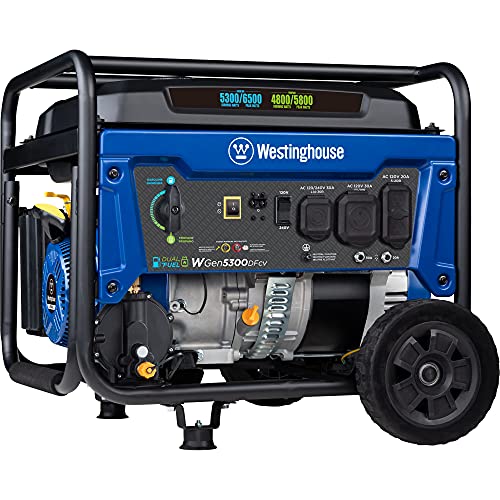
- Gasoline mode: 5300 Running Watts / 6500 Peak Watts; Propane: 4800 Running Watts / 5800 Peak Watts.
- 4.7 gallon fuel tank with gauge; up to 14.5 hours runtime with 120/240V selector.
- Outlets include one 5–20R 120V, one TT-30R 30A RV, and one L14-30R 30A transfer-switch-ready receptacle.
- Includes oil, funnel, propane hose, tool kit, wheel kit, and manual for quick setup.
- Best for homeowners needing reliable dual-fuel operation and transfer-switch readiness.
Caution: Running Watts vary by fuel type; performance depends on fuel quality and load distribution. Not ideal for long, continuous high-load operation without proper ventilation and storage.
Westinghouse 6600 Peak Watt Home Backup Generator

- Gas-powered with 5300 running watts and 6600 peak watts.
- 4.7 gallon tank with gauge; up to 14.5 hours runtime at 120/240V option.
- Outlets include one 5–20R 120V, one TT-30R 30A RV outlet, and one L14-30R 30A transfer-switch-ready receptacle.
- CO sensor included for enhanced safety; recoil start for quick ignition.
- Best for users who want a robust dual-outlet setup for home backup and RV use.
Caution: Recoil start requires some manual effort; ensure proper clearance and ventilation during operation.
ComJoy 5500W Peak Inverter Generator

- 5500W peak power with 120V/240V dual voltage; L14-30R 30A RV outlet plus two 120V outlets and USB-C/USB-A ports.
- 7-port charging hub adds versatility for charging multiple devices on-site.
- Gas-powered with a 223cc engine; CO watchdog safety and lightweight, portable design.
- Best for RVers needing shore-power compatibility and multiple charging options in one unit.
- Limitation: Heavier setup than smaller inverter models; longer run times depend on load and fuel type.
Westinghouse 4650 Peak Watt Dual Fuel
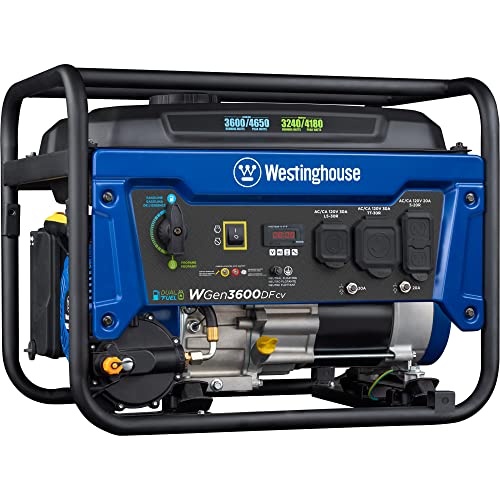
- 4650 peak watts; 3600 running watts on gasoline, 3240 running watts on propane.
- 4 gallon fuel tank with gauge; up to 14 hours runtime per tank.
- Outlets include 5–20R 120V, TT-30R 30A RV, and L5-30R 30A; rubber outlet covers for safety.
- Plug-and-play setup with included oil funnel, tool kit, and manual.
- Best for users seeking a compact, dual-fuel option with RV readiness for light to moderate loads.
- Caution: Lower running watts than larger models; plan for mid-range loads and outdoor use with proper ventilation.
WEN 8000-Watt Dual Fuel Portable Generator

- Dual fuel design with 8000 surge watts and 6500 running watts (gas); 7200 surge and 5850 running watts (propane).
- Electric start for quick ignition; designed for transfer-switch and RV readiness, with CO watchdog safety.
- Provides higher power capacity for demanding loads; versatile for job sites and home backup.
- Best for higher-demand needs where a 240V output and multiple outlets are required.
- Limitation: Higher weight and footprint; consider transportation and storage needs before purchase.
Buying Guide: 240V 30A Generator Essentials
- What is 240V capability and why it matters: 240V outlets power heavy-duty equipment and electrical panels; essential for transfer-switch setups and RV shore power.
- Outlets to look for: TT-30R (RV 30A), L14-30R (NEMA 14-30 30A), and 5–20R (standard 120V) provide flexible power distribution.
- Fuel options: Dual-fuel models can switch between gasoline and propane, offering flexibility during supply disruptions and longer runtimes.
- CO safety: Look for CO sensors or watchdog features that automatically shut down the generator if carbon monoxide is detected.
- Portability vs. power: Heavier units deliver more watts but require better transport solutions; consider wheels, handles, and a wheel kit if frequently moved.
- Run time and fuel capacity: Larger tanks and efficient engines extend operation; plan runtimes based on actual loads and duty cycles.
- Noise considerations: Inverter-based models tend to run quieter, which is beneficial for residential areas and camping.
- Maintenance and startup: Check included tools, oil, and user manuals; ensure you have proper fuel storage and a plan for oil changes.
Frequently Asked Questions
- What defines a 240V 30A generator? A generator with a 240V outlet configured for 30A (such as TT-30R or L14-30R) capable of feeding 240V electrical systems or RV hookups.
- Are dual-fuel generators better for RV use? Yes, dual-fuel options provide fuel flexibility and extended runtimes, useful when access to gasoline is limited.
- What is the difference between peak watts and running watts? Peak watts indicate maximum power for short bursts; running watts show continuous power output during operation.
- Is CO safety essential for generators? Yes. CO sensors help prevent exposure to harmful carbon monoxide during operation.
- Why consider a generator with transfer-switch readiness? It simplifies connection to home electrical panels during outages and aligns with backup power plans.
- What should I consider for maintenance? Regular oil changes, air filter checks, spark plug inspection, and proper fuel stabilization are key for longevity.