Answering the common buyer question: which 190W (or near‑190W) solar panels deliver reliable power for off‑grid use in RVs, boats, caravans, and cabins? This guide compares five well‑matched options, focusing on compact size, efficiency, and installability. It helps buyers choose based on space, mounting needs, and shading tolerance. The top picks are suited for different profiles: small Class B vans needing compact panels; mobile setups requiring lightweight, easy mounting; and semi‑permanent off‑grid installations demanding durability.
Summary table of chosen products
| Product | Best for | Key Strength | Limitations |
|---|---|---|---|
| HQST 190W 12V Monocrystalline | Compact RVs and boats | High efficiency; easy mounting | Standard 190W; no bifacial tech |
| Zamp Solar Portable 190W | Mobile setups; travel trailers | Foldable design; 5‑stage controller | Portability adds hardware needs |
| Callsun N‑Type 200W (Bifacial) | Off‑grid homes and RVs with shade | Bifacial 25% efficiency; anti‑shade | Higher cost; larger footprint |
| Rvpozwer 200W N‑Type 18BB | RVs and boats with space limits | 25% efficiency; 18BB design | 18BB may be less common for replacements |
| Go Power 200W Overlander Kit | RV permanence; dry camping | Expandable up to 600W; controller included | Kit size bigger than ultra‑compact panels |
HQST 190W 12V Monocrystalline Solar Panel
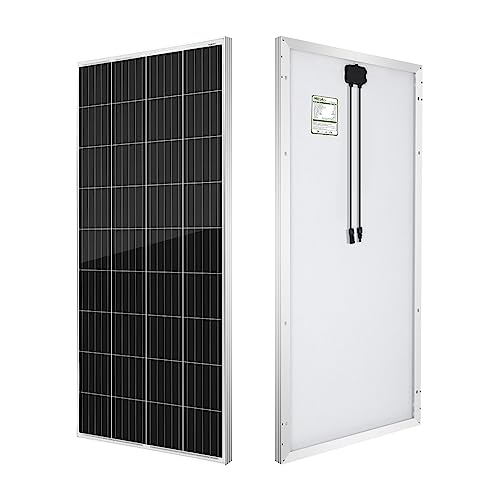
Best for: small off‑grid vehicles and boats needing dependable power without excess space. This HQST panel uses high‑efficiency monocrystalline cells with bypass diodes to maintain output in shade. A corrosion‑resistant frame supports outdoor exposure and a sturdy fit for various mounts.
Why selected: It emphasizes space efficiency and reliability with EL testing and hot‑spot protection. Pre‑drilled back holes enable fast mounting to Z‑brackets, tilt mounts, or poles. The panel withstands strong winds (2400 Pa) and snow loads (5400 Pa), making it a durable choice for mobile deployments.
Caution: It is a single 190W module; for larger systems, plan extra panels or a higher‑watt controller to meet daily energy needs.
Zamp Solar Portable Solar Kit 190W

Best for: travelers who want a portable, ready‑to‑go solar option for RVs and campers. This kit features a compact 190W monocrystalline panel with a 15A 5‑stage controller and a foldable design for easy transport and storage.
Why selected: The kit prioritizes portability without sacrificing efficiency. The foldable frame reduces space when off duty and simplifies setup at the campsite. It’s a practical option for users who rotate between locations and need a quick‑connect system rather than a full roof installation.
Caution: Portable setups require securing the panel during travel and may need additional mounting hardware for vehicle tops when not in use.
Callsun N‑Type 16BB 200W Bifacial Panel

Best for: RVs and marine setups where shading is likely and space is available for higher wattage. This 200W N‑Type bifacial panel uses 16BB busbars to reduce hot spots and increase durability, with a backsheet that captures rear light for extra energy.
Why selected: Bifacial technology can increase total output under favorable conditions, and the N‑Type cells offer higher efficiency and better low‑light performance. TwinCell anti‑shade design helps maintain power when parts of the panel are shaded.
Caution: Slightly larger footprint and higher upfront cost may be a consideration for ultra‑compact installs. Replacement parts for parallel connections may be needed depending on system configuration.
Rvpozwer 200W N‑Type 18BB Panel

Best for: off‑grid homes, RVs, and boats where 200W is within the space budget and longer service life is valued. This N‑Type 18BB design emphasizes higher efficiency and durability, with pre‑drilled holes for flexible mounting.
Why selected: It is marketed for high efficiency (25%) and robust construction, with a design that supports quick installation on varied brackets. The 18BB technology can offer advantages in reliability and stress tolerance over time.
Caution: The 18BB design may require compatible mounting hardware and wiring components that suit this busbar arrangement.
Go Power Overlander 200W Kit

Best for: campers and full‑time RVers who want an expandable solar solution with a ready‑to‑install kit. The 200W kit includes a 30‑amp Bluetooth PWM controller and cables for straightforward setup.
Why selected: The package is designed for growth—expandable to 600W with the same controller, making it suitable for evolving energy needs in remote locations. The controller integration supports easier system management and monitoring.
Caution: The kit’s total capacity expansion requires additional panels and wiring as you scale beyond 200W. Check compatibility with existing battery banks before expanding.
Buying Guide: Key Considerations For 190W Or Near‑190W Panels
- Power needs: Estimate daily energy usage in watt‑hours and match panel wattage to cover peak sun hours in your location.
- Space and mounting: Evaluate roof or storage space, mounting options, and weight. Portable kits offer flexibility but require secure stowing.
- Panel technology: N‑Type cells and bifacial designs can improve efficiency and shading tolerance but may cost more upfront.
- Durability: Look for corrosion‑resistant frames, EL testing, and weather resistance for outdoor installations.
- System compatibility: Ensure the chosen panel works with your controller (PWM/MPPT) and battery bank (12V/24V) to maximize efficiency.
- Expansion potential: If planning future growth, consider kits that support easy expansion to higher wattage without complete rewiring.
FAQ
- What does 190W mean on a solar panel?
A: It indicates the panel’s maximum electrical power output under standard test conditions. Real‑world output varies with sunlight, angle, and temperature. - Are 200W panels significantly better than 190W panels?
A: Not always; 10–15% more output can help in low‑sun conditions, but you must consider space, weight, and mounting compatibility. - Which panel is best for shading?
A: Panels with bifacial cells or anti‑shade technology (like the 16BB/18BB versions) handle partial shading better and deliver power from unshaded sections. - Do I need a larger controller for higher wattage panels?
A: Yes. Higher wattage panels often require a larger MPPT/PWM controller and appropriately sized wiring to avoid losses. - Is portable solar better for a movable RV?
A: Portable kits offer flexibility for short stays or temporary setups, but fixed roof panels reduce wind load and streamline aesthetics.