Across woodworking projects, a 16 gauge finish nailer delivers clean, discreet fastening ideal for molding, cabinetry, trim, and furniture. This guide highlights top options for a range of buyers—from professionals needing reliable all-day performance to DIYers seeking cordless convenience. Each pick below is best for specific tasks: Metabo HPT for precision and control, Bostitch for durable versatility, DEWALT for battery-powered portability, meite for lightweight, cost-conscious pros, and 3PLUS for balanced features at a friendly price.
| Product | Best for | Key Benefit |
|---|---|---|
| Metabo HPT NT65M2S | Pro finish work with precise drive control | Lightweight, selective actuation |
| Bostitch 2.5-in 16-Gauge | Durable finish jobs with versatility | Includes case, accessories, and tips |
| DEWALT DCN660B | Cordless reliability on site | Tool-free trigger with brushless motor |
| meite T64A 16 Gauge | Budget-conscious contractors | Low weight with quick jam release |
| 3PLUS HT64SP | Balanced features with easy depth control | Tool-free depth and 360° exhaust |
Metabo HPT NT65M2S Finish Nailer

The Metabo HPT NT65M2S is a lightweight 16 gauge finish nailer designed for molding, chair rail, and cabinetry work. It uses 1″ to 2-1/2″ finish nails and offers a selective actuation switch for bump or sequential firing. This makes it well-suited for precise, repeatable nailing in trim and cabinetry. Best for professional finish carpenters who prioritize control and reduced fatigue.
Best for: Pro finish work requiring precise nail placement with quick mode switching. The tool’s lightweight design helps operators maintain accuracy over long sessions. Caution: Selective actuation mode requires familiarity to maximize efficiency and minimize misfires.
HBT64P 16 Gauge Finish Nailer

The HBT64P features a magnesium housing for reduced weight and robust durability, driving 1″ to 2-1/2″ 16-gauge finish nails. Its tool-free depth-drive adjustment and jam-release make it a practical choice for busy workshops. Best for: Builders who value lighter weight and straightforward maintenance. Caution: Weight is still substantial compared to compact models, which may affect overhead use in high-repetition tasks.
3-in-1 Cordless Brad Nailer (Meant for 16 GA uses)

This cordless option supports 1-1/4″ to 2-1/2″ finish nails and is compatible with Dewalt 20V Max batteries (battery not included). It features tool-free depth adjustment, quick jam release, and built-in LED lighting for visibility. Best for: DIYers or pros seeking cordless convenience without a compressor. Limitation: Battery and charger are not included, so ongoing cost and battery availability should be planned.
3PLUS HT64SP 16 Gauge Finish Nailer
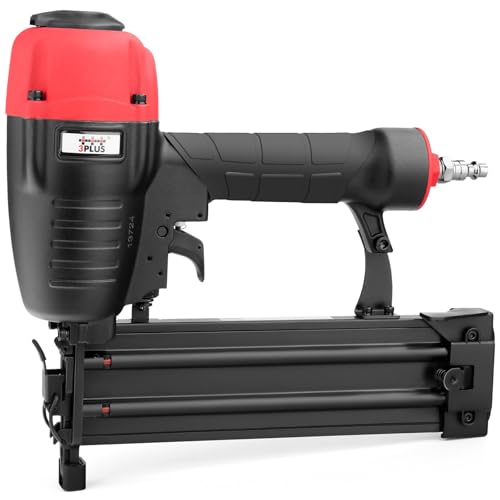
The 3PLUS HT64SP is a pneumatic straight finish nailer that supports 3/4″ to 2-1/2″ nails. It offers tool-free depth adjustment and a 360° exhaust cover to redirect airflow away from the user. Best for: Professionals needing an affordable tool with flexible depth control. Caution: Construction-grade power requires a compressor and hose, which adds setup considerations on-site.
Bostitch 2.5-in 16-Gauge Finishing Nailer

The Bostitch model accepts 1″ to 2-1/2″ 16-gauge finish nails and includes a nailer, air fitting, nails, a carrying case, and extra no-mar tips. It uses a selectable trigger for sequential or bump operation. Best for: Finish carpenters needing a turnkey kit with accessories. Limitation: As a pneumatic tool, it requires a compressor and air supply, which may limit portability on some jobs.
Buying Guide
Corded vs Cordless: Which fits your workflow?
Cordless models (like DEWALT and the 3-in-1 option) provide portability and workspace flexibility, especially for outdoor or remote sites. Corded or pneumatic models deliver consistent power for long sessions without battery changes. Consider job duration, access, and noise considerations when choosing.
Nail Length and Material Compatibility
Typical 16-gauge finish nails range from 1″ to 2-1/2″. Baseboard, casing, and thin trim usually benefit from 1-1/2″ to 2″ nails. Heavier trim or denser wood may require longer nails. Verify your material thickness and driver depth range before purchase.
Depth Adjustment and Safety Features
Tool-free depth adjustment allows consistent flush drives across varying material thickness. A no-mar tip protects delicate surfaces, while jam release mechanisms minimize downtime. Look for anti-double-fire features to reduce misfires on tight profiles.
Weight, Balance, and Ergonomics
Lightweight models reduce fatigue when working overhead or in long sessions. Magnesium or composite housings can offer durability without added weight. Ergonomics influence accuracy and control in trim work and cabinetry installations.
Maintenance and Accessories
Consider included accessories such as carrying cases, spare no-mar tips, and air fittings. For cordless tools, factor in battery availability and charging times. Regular lubrication and cleaning help extend tool life and consistency of drive quality.
Choosing by Use Case
For precise, repeatable trim work in cabinetry, the Metabo HPT and Bostitch options are strong all-around choices. If cordless convenience is critical, DEWALT or the 3-in-1 cordless Brad Nailer can reduce setup time. For budget-minded projects, the meite or 3PLUS options offer compelling value without sacrificing essential features.
Frequently Asked Questions
- What is the benefit of a 16-gauge finish nailer?
A 16-gauge finish nailer provides strong hold for trim and cabinetry with minimial visible nail holes, suitable for delicate finish work. - Do I need a compressor for all these nailers?
No. Cordless models operate without a compressor, while pneumatic models require a compressor or air supply. - What nail length should I use for baseboards?
Typically 1-2 inches, depending on baseboard thickness and material density. Always test on scrap first. - Is depth adjustment important?
Yes. Proper depth ensures flush drives without tearing substrate. Tool-free adjustments speed setup on job sites. - Are no-mar tips necessary?
They help prevent denting on soft woods and delicate finishes, especially on visible surfaces. - Which brand offers the best value for a beginner?
Brands like 3PLUS or meite often provide balanced feature sets at accessible prices, suitable for DIYers.