Discover high-capacity, fast-charging battery generators that deliver around 1500 watts of continuous power for home backup, camping, RVing, and off-grid living. This guide highlights five top models with reliable LiFePO4 batteries, strong peak outputs, and user-friendly features to keep essential devices running when grid power is unavailable.
Summary Table of Selected Products
| Product | Brand | Rated Output | Battery | Key Benefit |
|---|---|---|---|---|
| EF ECOFLOW Delta 3 Classic | EF ECOFLOW | 1800W (3600W surge) | 1024Wh LiFePO4 | Ultra-fast charging, UPS protection |
| Anker SOLIX C1000 Gen 2 | Anker | 2000W (3000W peak) | 1024Wh LiFePO4 | HyperFlash recharge, compact |
| Jackery Explorer 1000 v2 | Jackery | 1500W (3000W surge) | 1070Wh LiFePO4 | One-hour fast charging, long life |
| EF ECOFLOW Delta 2 | EF ECOFLOW | 1800W | 1024Wh LiFePO4 | Fast charging, expandable capacity |
| OUPES Mega 1 Portable Power Station | OUPES | 2000W (4500W surge) | 1024Wh LiFePO4 | Modular expansion, fast AC charging |
EF ECOFLOW Delta 3 Classic Portable Power Station
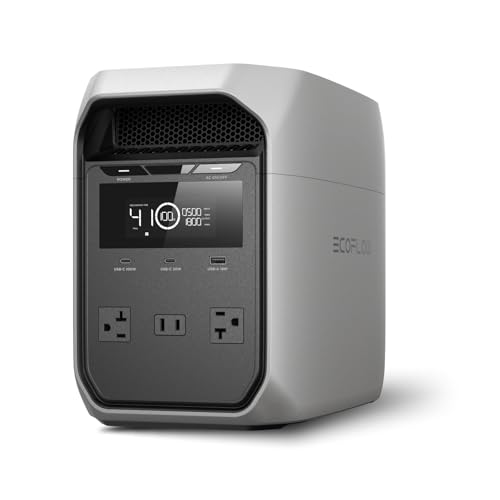
EF ECOFLOW Delta 3 Classic delivers 1800W continuous power with a 3600W surge, making it capable of running refrigerators, microwaves, laptops, and more. The X-Boost mode helps expand capability up to 2600W for heavier loads, while X-Stream charging provides a 0–80% recharge in about 45 minutes. A <10ms UPS feature protects sensitive electronics by instantly switching to battery power, ensuring uninterrupted operation for PCs, servers, and medical devices. This model uses a 1024Wh LiFePO4 battery for improved longevity and reliability.
Anker SOLIX C1000 Gen 2 Portable Power Station

The Anker SOLIX C1000 Gen 2 provides 2,000W continuous output (3,000W peak) from a 1,024Wh LiFePO4 battery. Its 49-minute recharge via upgraded HyperFlash tech and 1,600W input makes it an excellent option for rapid outage preps, camping, or tailgating. With ten ports, you can power multiple devices simultaneously—ideal for emergency backups, remote work, or off-grid living. The C1000 Gen 2 emphasizes portability, being 14% smaller and 11% lighter than comparable models.
Jackery Explorer 1000 v2 Portable Power Station

Jackery’s Explorer 1000 v2 combines 1,500W continuous output with a 3,000W surge and a 1,070Wh LiFePO4 battery. It weighs about 23.8 pounds and includes a foldable carry handle, making it portable for camping, RV trips, or emergency use. The company’s ChargeShield 2.0 technology supports safer, faster charging, and emergency charging can reach 0–100% in roughly one hour with the Jackery App. The device is engineered for longevity, with an expected life exceeding 10 years thanks to the durable LFP battery.
EF ECOFLOW Delta 2 Portable Power Station

The Delta 2 offers 1,024Wh LiFePO4 capacity with 1,800W AC output and 100W USB-C. Notable features include seven X-Faster charging modes, reaching 0–80% in 50 minutes and 0–100% in 80 minutes when connected to AC. You can expand capacity up to 3kWh by adding standalone batteries, making it suitable for longer trips or larger loads while preserving the compact form factor and quiet operation.
PowerSmart 4400-Watt Dual Fuel Portable Inverter Generator

While not a typical lithium battery-based unit, the PowerSmart generator delivers a high starting wattage of 4400W and 3600W rated power, with a long runtime of up to 11 hours at 25% load thanks to its sizeable fuel tank. It operates quietly at 76 dB from 23 feet and is EPA compliant. This option appeals to users seeking a traditional gasoline backup with higher power capability and longer runtime for extensive off-grid needs, albeit without battery-based recharge flexibility.
OUPES Mega 1 Portable Power Station
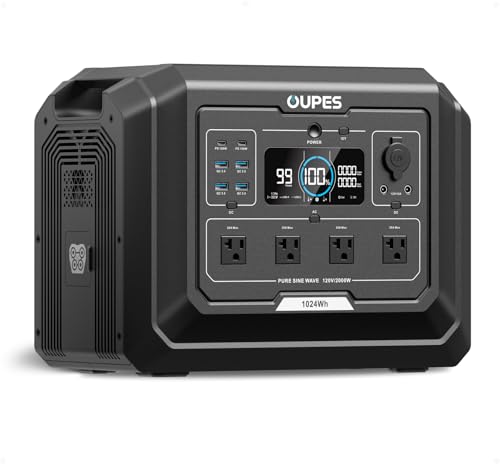
The OUPES Mega 1 features 2,000W continuous output (4,500W surge) from a 1,024Wh LiFePO4 battery. It supports modular expansion up to 5,120Wh by attaching extra B2 batteries, enabling scalable power for growing needs. It charges rapidly via AC with a claimed 0–80% in 36 minutes, and a 26-minute charge when combining AC and solar inputs. The unit provides professional-grade delivery with pure sine wave output suitable for sensitive electronics and heavy loads, making it a strong all-around choice for home backup and travel.
Buying Guide: What To Consider When Choosing A 1500 Watt Battery Generator
- Power output and surge capacity: For essential appliances like refrigerators or power-hungry tools, aim for models around 1500W continuous with a higher surge margin (2000–3600W) to handle startup currents.
- Battery chemistry and longevity: LiFePO4 batteries generally offer longer lifespans and safety benefits over older Li-ion chemistries. Check cycle life (often 2,000–4,000+ cycles) to estimate long-term value.
- Charging speed: Fast-charging capabilities matter for quick restarts after outages. Look for AC fast charging, higher wattage inputs, and optional solar charging compatibility for off-grid use.
- Portability vs capacity: Consider weight and form factor relative to your typical use (camping, RVing, or home backup). Some models trade extra capacity for portability, while others prioritize expandable capacity.
- Expandability: Some units support external batteries or modular expansion. If you anticipate growing power needs, choose systems that easily scale beyond 1 kWh to 3 kWh or more.
- UPS and protection features: A fast-acting UPS (uninterruptible power supply) can prevent device downtime and protect sensitive electronics during power transitions.
- Quiet operation and emissions: Battery generators are typically quiet and emission-free, but some models can still generate noticeable fan noise under load—factor this into your use case.
- Weather and outdoor reliability: For outdoor or emergency setups, look for rugged construction, reliable cooling, and secure battery chemistry suitable for varied climates.
- Warranty and serviceability: A solid warranty and accessible customer support help ensure long-term satisfaction with your investment.
What These Models Mean For Different Scenarios
For home backup, models with higher continuous outputs and fast recharging provide seamless transitions during outages. For camping and RV use, portability matters alongside sufficient power to run climate control units, lights, and small appliances. Off-grid living benefits from expandable batteries and robust safety features. Emergency preparedness enthusiasts should prioritize UPS features and reliable LiFePO4 batteries for longevity in climate-checked environments.