Answering the need for reliable 150-watt solar panels, this guide highlights five solid options. These panels balance portability, durability, and efficiency for RVs, boats, cabins, and off-grid setups. The top picks are best for different buyers: rugged outdoors users, travelers needing foldable designs, and those prioritizing high efficiency or flexibility. Use the quick comparison table below to spot the best fit for your situation.
Quick comparison table
| Product | Best For | Why It Stands Out |
|---|---|---|
| DOKIO 150W 18V Monocrystalline Panel | RVs, boats, off-grid cabins requiring sturdy flat panels | High efficiency, strong frame, MC4 integration, outdoor-ready stability |
| DOKIO 150W Portable Foldable Panel | Travelers and campers needing portable, compact design | Folds small, long controller cable, separate controller for safe charging |
| RICH SOLAR 150W 12V Panel | Off-grid power fans who want reliable panel with durable framing | N-Type cells for low LID and rugged build, versatile wiring |
| ACOPOWER 150W Bifacial Panel | Compact installations needing higher efficiency in reflective environments | Bifacial N-Type cells, high efficiency, positive power tolerance |
| BigBlue 150W Portable Panel | Campers needing durable, weather-ready foldable design | High efficiency, wide compatibility with adapters, durable frame |
DOKIO 150W 18V Monocrystalline Panel
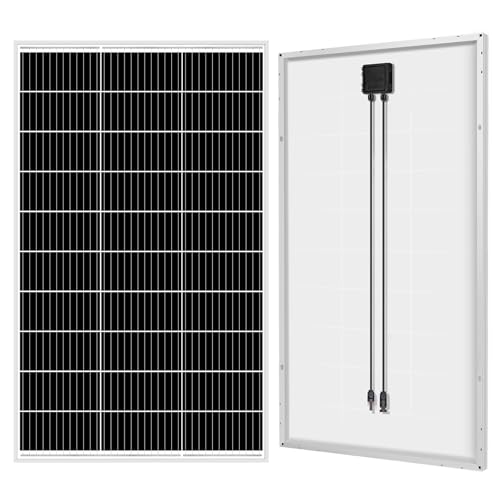
The DOKIO 150W 18V panel suits users who need a solid, non-folding solution for RVs, boats, or fixed roofs. It uses high-efficiency monocrystalline cells to deliver steady power even when sunlight is limited. The tempered glass and corrosion-resistant aluminum frame withstand wind and snow, maintaining performance in challenging conditions. MC4 connectors simplify 12V system integration and allow wiring in series or parallel for higher voltages. Bypass diodes help minimize shading losses.
Best for: RVs, boats, or small off-grid sheds needing a reliable, weather-tough fixed panel. Choose this if you prefer a straightforward 12V setup with durable framing. Caution: installation on curved roofs may require additional mounting hardware.
DOKIO 150W Portable Foldable Solar Panel Kit

This foldable kit is ideal for travelers who need a compact solar solution. It folds to a small footprint, weighs light, and includes a standalone controller for 12V batteries. The long 9.8-foot cable keeps the controller shaded for cooler operation and safer handling. The kit is well-suited for RV camping, vans, or emergency backup. It’s best for those who prioritize portability over permanent installation. Limitations include a separate controller requirement and the need to unpack for setup.
RICH SOLAR 150W 12V Panel

RICH SOLAR’s 150W panel uses advanced N-Type cells designed for low light and high temperature tolerance. The 44” x 26.4” x 1.2” frame and tempered glass with an anti-reflective coating offer durability for outdoor use in RVs, boats, or off-grid installations. The provided 3-foot cable supports quick connections to charge 12V batteries, and standard wiring enables series or parallel configurations. Best for: users needing strong performance in varied weather with flexible system expansion. Caution: ensure proper weatherproofing around connections in marine environments.
ACOPOWER 150W Bifacial Panel

ACOPOWER offers a 150W bifacial option with N-Type cells that capture light from the front and reflected energy from the rear. This design increases real-world energy yield, especially in reflective environments like sand, snow, or rooftops. The panel supports up to 25.4% cell efficiency and features a robust 16BB front for higher power density. Positive power tolerance helps ensure predictable output. Best for: compact roofs or shaded installations where every watt on the rear side helps. Limitation: bifacial performance depends on rear-side illumination and mounting alignment.
BigBlue 150W Portable Solar Panel

BigBlue’s 150W foldable panel emphasizes portability and durability. It uses ETFE-backed cells for higher efficiency and a longer lifespan, and it includes built-in diodes to bypass faulty cells for continued power. With MC-4 compatibility and multiple adapter options, it’s adaptable for power stations, RVs, and camping gear. Best for: campers and off-grid users who prioritize robust foldability, weather resistance, and broad device compatibility. Caution: folding joints should be checked regularly to prevent wear over time.
Buying Guide
What should you consider when choosing a 150W solar panel?
- Do you need a fixed panel on a roof or a portable panel for camping and travel? Fixed panels favor durability and space efficiency; portable panels favor mobility and setup speed.
- Mono panels deliver higher efficiency in limited space. N-Type cells offer lower light-induced degradation (LID) and better performance in heat and cold.
- Look for tempered glass, strong frames, and weather resistance ratings (wind and snow loads) for outdoor use.
- MC4 connectors simplify integration with 12V systems, controllers, and potential series/parallel configurations for higher voltages.
- Bifacial or high-efficiency cells generate more power per square foot, useful on tight rooftops or with reflective surroundings.
- Longer cables keep controllers shaded for cooler operation and reduce overheating risks.
Frequently asked questions
- What makes a 150W panel suitable for RVs? It provides enough charging power for batteries while remaining within typical roof area and weight limits for RVs.
- Are bifacial panels worth it for off-grid setups? They can offer higher real-world output in reflective environments, but rear illumination may be limited in shaded or non-reflective locations.
- Is a separate controller necessary? For foldable kits, a standalone controller improves safety and offers easier upgrades; fixed panels may use a built-in or nearby controller in some configurations.
- How should panels be mounted for maximum efficiency? Align panels to capture direct sun with minimal shading; consider tilt and orientation based on latitude and season.
- Can I mix different brands in one system? Yes, but ensure compatible voltages, current ratings, and controller capacity to avoid overloading components.
- What maintenance is required? Clean dust and debris from panels periodically and inspect frames and wiring for corrosion or wear after harsh weather.