Whether you’re building a small off-grid backup or integrating solar into a grid-tied system, selecting the right 12V grid tie inverter is essential. This guide reviews five solid 12V-compatible options, highlighting who each product is best for, key benefits, and potential limitations. The selections emphasize MPPT efficiency, cooling, and compatibility with typical 12V or 18V–24V solar panels. The buyer can compare devices by input voltage range, output voltage, and MPPT performance to choose the best fit for a home solar project or microgrid installation.
Summary table of chosen products
| Product | Best For | Key Benefit | Notable Limitation |
|---|---|---|---|
| 1000W Grid Tie Inverter (YINZINR) | General 18V solar panels | High efficiency MPPT, aluminum chassis | Input range 10.8–32V requires appropriate panel voltage |
| Y&H 500W Grid Tie Inverter | Low-to-mid power 12V systems | MPPT 11–21V, battery discharge control | Lower power rating |
| HIPUDNLM 1000W Grid Tie | Higher cooling needs | Active cooling fan, solid aluminum build | AC output tied to grid; follow local rules |
| Y&H Grid Tie 600W | Compact 12V panels | Stackable design | Care with wiring; ensure MPPT range |
| Y&H 1000W Stackable MPPT | Mid-to-large 12V solar arrays | Wider MPPT range, stackable | On-grid connection requirement |
1000W Grid Tie Inverter, 10.8-32V DC Input 110V AC Output Grid Tie MPPT Pure Sine Wave for 18V Solar Panel

Best for mid-sized 18V solar panels, this inverter uses an aluminum alloy casing and imported components. It advertises MPPT with efficiency above 99% and a high-frequency transformer for stable power delivery. Best for homeowners seeking strong efficiency and durable construction in a single-unit grid-tie setup. Caution: ensure your panel voltage stays within the 10.8–32V input range to avoid suboptimal performance.
Y&H 500W Grid Tie Inverter DC16V-28V MPPT Pure Sine Wave AC110V Output for 12V Solar Panel

Best for smaller 12V systems, this model offers MPPT operation in the 11–21V range and an adjustable 80–250W output when used with a 12V battery. It includes low-voltage battery protection to extend battery life. Choose this if your system runs modest panel output and you want controlled discharge. Caution: efficiency declines as the DC input nears the lower MPPT limit, so avoid running near 11V.
1000W Grid Tie Inverter, 10.8-30V DC Solar Input AC90-140V Output Stackable MPPT Pure Sine Wave

Best for larger 12V solar arrays with stacking capability, this device features an advanced cooling system (high-speed fan) and a robust aluminum body. It is well-suited for continuous operation in warmer environments. Caution: ensure MPPT input remains within the stated 10.8–30V window and avoid over-voltage scenarios beyond panel capabilities.
Y&H Grid Tie Inverter 600W Stackable DCDC15-28V PV Input AC110V MPPT

Best for compact 12V solar setups requiring a stackable option, this inverter covers a 15–22V MPPT range and supports 12V panel configurations. It is designed to be ventilated in warm environments and warns about possible polarity mistakes during wiring. Choose this if you plan to expand later with more units in a microgrid. Caution: ensure correct polarity during installation; incorrect wiring will prevent the LED from lighting.
Y&H 180W MPPT Grid Tie Micro Inverter PV Input DC16-26V

Best for very small or educational 12V solar projects, this 180W micro inverter emphasizes MPPT in a 16–26V input window. It’s suitable for learning or small-scale off-grid tasks. Caution: performance scales with panel voltage staying within MPPT; stepping outside this range reduces efficiency.
Y&H 1000W Grid Tie Inverter Stackable MPPT Pure Sine Wave
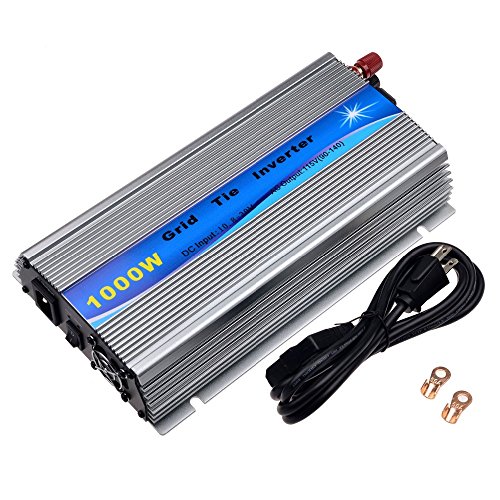
Best for larger 12V solar arrays with stacking capability, this model supports a broad MPPT range (15.5–23V) and is designed for grid-tied installations. It requires AC output to be connected to the grid and emphasizes correct DC polarity and MPPT adherence. Caution: this is an on-grid device; it should be installed following local regulations and electrical codes.
Buying Guide
What MPPT Range Do You Need?
MPPT helps maximize energy harvest from solar panels. Look for an inverter whose MPPT voltage window overlaps with your panel’s Vmp. A wider range offers flexibility for different panels and conditions but may come with higher cost.
Is Cooling Important for Your Location?
Inverter efficiency and longevity benefit from effective cooling. Models with built-in fans or solid aluminum housings perform better in hot environments or enclosed spaces.
On-Grid vs Off-Grid Compatibility
Some units are designed specifically for on-grid use (AC output tied to the grid). If you must meet local grid interconnection rules, ensure the product is intended for grid-tied operation and complies with applicable standards.
System Size and Expansion
For future growth, consider stackable or modular designs. Stacking allows adding more units to increase capacity as your solar array expands.
Safety and Wiring Considerations
Correct polarity, secure wiring, and proper enclosure ventilation are essential. Follow the manufacturer’s installation notes to avoid LED indicators failing to light or overheating.
Practical Quick Comparisons
- Best for efficiency: 1000W Grid Tie Inverter (YINZINR) with MPPT efficiency above 99%.
- Best for small systems: Y&H 180W MPPT Micro Inverter.
- Best for expansion: Y&H 1000W Stackable MPPT.
- Best for cooling in heat: HIPUDNLM 1000W with automatic cooling.
- Best value for 12V panels: Y&H 500W Grid Tie Inverter with adjustable output.
FAQ
- What does MPPT stand for and why is it important? MPPT stands for Maximum Power Point Tracking. It optimizes the panel operating voltage to harvest more energy, improving efficiency.
- Can I connect a grid-tie inverter to a home battery system? Some units support battery discharge in 12V configurations, but always verify compatibility and safety regulations before connecting to a battery bank.
- Do grid-tie inverters require the grid to be connected? On-grid inverters must connect to a utility grid; follow local electrical codes and safety rules.
- What should I check before buying? Check input voltage range, MPPT range, output voltage compatibility (AC), cooling, and whether the unit supports stacking for future expansion.
- Are there safety risks with improper wiring? Yes. Incorrect polarity or wiring can prevent the unit from operating and pose electrical hazards. Always follow installation instructions or hire a licensed electrician.
- Can these inverters work with different panel voltages? They work best when your panel Vmp lies within the MPPT range stated by the inverter. Mismatches reduce efficiency and output.