Looking to turn a 12V car battery into reliable 110/120V AC power? This guide selects five solid options for travelers, campers, and mobile workers who need clean, stable power from a 12V source. Each product is evaluated for best use-case, safety features, and practical limits. The top picks cover varied power needs—from compact, travel-ready units to high-wattage inverters suitable for tools and small appliances. Buyer-friendly notes highlight who should choose each model and why.
Quick overview: the table below lists five recommended inverters with their key strengths. Use it to compare output power, suitability, and notable protections at a glance.
| Product | Continuous Power | Peak Power | Best For | Notable Pros |
|---|---|---|---|---|
| Pro Chaser 400W | 400W | 800W | Road trips and light laptop use | Dual AC outlets, USB ports, compact |
| OLTEANP 1000W | 1000W | 2000W | Travelers, mobile offices | LCD display, multiple protections |
| BELTTT 1000W Pure Sine | 1000W | 2000W | Home-office on the road | Pure sine wave, intelligent LCD |
| OLTEANP 500W | 500W | 1000W | Moderate power needs | Built-in protections, compact |
| LANDERPOW 3000W Pure Sine | 3000W | 6000W | RV, off-grid, heavy loads | High capacity, multiple outlets |
Pro Chaser 400W Power Inverter
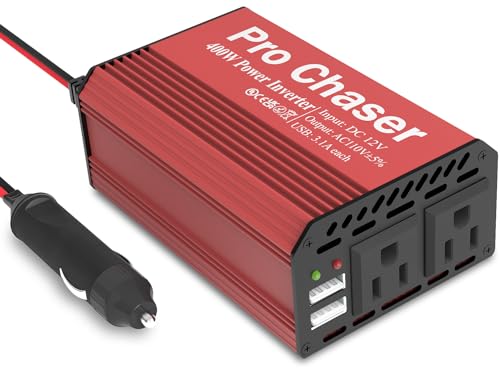
Best for light travel and device charging on the move. This unit provides a steady 400W with a peak of 800W, featuring two 110V outlets and dual USB ports for fast charging. It includes a 30-inch cord, offering flexibility for seating arrangements in vehicles or campsites. The compact size makes it suitable for families that need to power laptops, tablets, or small appliances during road trips. A potential limitation is its lower continuous power capacity, which may not handle high-wattage devices simultaneously for long periods.
OLTEANP 1000 Watt Power Inverter

Best for road trips and mobile offices needing sustained 110V/120V power. The OLTEANP unit delivers 1000W continuous with 2000W peak, suitable for laptops, small TVs, routers, and other electronics under 1000W. It is designed for cars, trucks, and camping, turning a vehicle battery into a stable power source. It includes multiple safety protections and intelligent cooling. Choose this if you expect longer operation times and higher power draws; a caveat is the need to manage heat during peak loads.
BELTTT 1000W Pure Sine Wave Inverter

Best for sensitive electronics and long-running devices. It supplies 1000W continuous power with up to 2000W peak. The pure sine wave output closely mimics grid power, reducing stress on AV equipment and appliances. The intelligent LCD displays input/output voltage and battery status for easy troubleshooting. A limitation is that higher-wattage loads can increase heat, so ensure adequate ventilation and monitor load levels during use.
OLTEANP 500 Watt Power Inverter

Best for compact setups with moderate power demands. The 500W continuous inverter is well-suited for charging laptops, tablets, and small TVs during short trips. It includes built-in protections such as undervoltage, overvoltage, overload, and overheat, with a cooling fan that adjusts to temperature. It’s a practical choice when space is limited and power needs are not extreme; avoid extended operation at or near peak loads to prevent overheating.
LANDERPOW 3000W Pure Sine Wave Inverter

Best for heavy-duty applications and off-grid use. This 3000W continuous, 6000W surge inverter powers RVs, home electricity, and solar setups, with 3 AC outlets plus 5V USB-C and 3.1A USB ports. It supports hardwired connections and remote control, enabling flexible installation for serious power needs. The high wattage enables running microwaves, power tools, and other demanding loads. A potential limitation is size and weight; ensure mounting space and adequate cooling in operation.
Buying Guide: How to Choose the Right 12V DC to 120V AC Inverter
Why choose a pure sine wave versus modified sine wave? Pure sine wave inverters deliver grid-like AC power that supports sensitive electronics and appliances without humming or noise. Modified sine wave models can be cheaper but may cause compatibility issues with certain devices. Consider continuous versus peak power. Continuous rating tells you what the inverter can sustain over time, while peak rating indicates the momentary surge a device may require at startup.
Key questions to guide your purchase
- What will I power, and for how long? If you run laptops or TVs for extended periods, prioritize 1000W or more with pure sine wave output.
- Do I need multiple outlets or USB-C/PD ports? If you rely on USB-C charging or multiple devices, look for at least two USB ports and a PD port.
- Where will it be used? For RVs or off-grid setups, a higher wattage unit with sturdy cooling is beneficial. For cars and camping, portability and cord length matter.
- What protections are essential? Undervoltage, overvoltage, overload, short-circuit, and overheat protections help prevent damage to both inverter and connected devices.
- Will I hard-wire the inverter? If so, ensure there is a hardwire port or kit and plan for safe installation.
Practical comparison tips
- Prioritize pure sine wave for sensitive electronics (like laptops and AV gear).
- Match continuous power to your total load; avoid running near the limit for long periods.
- Check cooling: inverters with active cooling perform better under load but require space for vents and fan clearance.
- Consider the reliability of protections; more comprehensive protection reduces risk of device damage.
Safety and installation considerations
- Always use the inverter with a properly rated car battery and fuse/inline protection where recommended by the manufacturer.
- Avoid running high-power appliances like microwaves or space heaters for long durations on small-inverter models.
- Place the inverter on a non-flammable surface and ensure ventilation to prevent overheating.
- Read the user manual for correct connection order and safety procedures before use.
FAQs
- What is the difference between 12V DC to 120V AC and 12V to 110V? The 120V and 110V references are standard voltages used in North America; most inverters provide 110V-120V output, compatible with common appliances.
- Can I run a refrigerator or microwave from a 12V inverter? High-wattage appliances like microwaves may exceed the continuous rating; a high-capacity pure sine wave inverter is recommended, but always verify the startup surge.
- Is a pure sine wave inverter worth it? Yes for sensitive electronics and audio-visual equipment, as it reduces hum and improves performance.
- Do all inverters require venting? Most inverters generate heat; active cooling units require ventilation space to prevent overheating.
- How do I determine the right wattage? Add up the continuous wattage of all devices you plan to run simultaneously, then choose an inverter with a comfortable margin above that total.
- Are inverter bricks dangerous? When used as intended with proper connections and fusing, inverters are safe; always follow manufacturer safety guidelines.