When selecting a 12500 watt generator, homeowners seek reliable power during outages, safe operation for electronics, and flexible fuel options. The following five models include a mix of inverter and traditional backup generators with high-output capabilities, remote starts, and multiple outlets. This guide highlights features, fuel flexibility, safety sensors, and operational runtimes to help compare options for home backup, RV use, and job sites.
| Product | Fuel Options | Key Feature |
|---|---|---|
| Westinghouse 12500 Watt Dual Fuel (Gas/Propane) | Gas, Propane | Remote start; transfer switch ready |
| Westinghouse 12500 Peak Watt Dual Fuel (Gas/Propane) | Gas, Propane | CO Sensor; remote start |
| GENMAX 12500W Tri-Fuel Inverter | Gas, Propane, Natural Gas | Bluetooth; CO Shield; pure sine wave |
| Westinghouse 12500 Peak Watt EFI Dual Fuel | Gas, Propane | EFI engine; CO sensor |
| Westinghouse 11000 Peak Watt Dual Fuel Inverter | Gas, Propane | Low THD; remote start |
The products below are selected for their relevance to high-wattage, flexible-fuel backup power with safety features and user-friendly operation.
Westinghouse 12500 Watt Dual Fuel Back-Up Generator

Powerful and versatile, this dual-fuel generator delivers 9500 running watts and 12500 peak watts when running on gasoline, or 8500 running watts and 11200 peak watts on propane. It features remote start via included key fob, both electric and recoil start options, and a 6.6-gallon fuel tank with a fuel gauge for up to 12 hours of operation. The unit includes a transfer switch-ready 120V L14-30R, a 120V 5–20R outlet, and a 14–50R 50A RV-ready outlet, all protected by rubber outlet covers for safety. The 457cc Westinghouse OHV engine includes automatic low-oil shutdown and a digital hour meter with VFT real-time display for voltage, frequency, and run-time data.
Designed for home backup with safe and durable construction, this model emphasizes reliability in emergency power scenarios, with GFCI outlets and a robust engine that supports extended use. It is suitable for homes with critical electronics and appliances that require steady power during outages. Consider this unit if you need substantial peak power and straightforward transfer-switch compatibility.
Westinghouse 12500 Peak Watt Dual Fuel Generator (CO Sensor)

This model balances peak capability with safety features, offering 9500 running watts on gasoline and 11200 peak watts with propane. It includes a CO sensor for added safety during operation, along with remote electric start and a recoil option. A 6.6 gallon tank supports up to about 12 hours of run time, depending on load. It has two GFCI 120V outlets, a 30A transfer switch outlet, and a 50A RV-ready outlet, plus an RV-ready 120/240V configuration. The engine uses a cast iron sleeve and includes an automatic low-oil shutoff and a digital hour meter to support maintenance planning.
With its emphasis on safety and long runtimes, this generator is well-suited for homes in areas with frequent outages or for RV and job-site applications where extended operation is required without frequent refueling.
GENMAX 12500W Tri-Fuel Inverter Generator

Designed for quiet operation and sensitive electronics, this inverter generator supports gasoline, propane, and natural gas with a dedicated LPG inlet for safe alternate-fuel connections. It delivers ≤3% THD pure sine wave power, which is suitable for laptops, phones, and medical devices. The unit includes a 50A 120/240V outlet, two 120V outlets, a 12V DC port, and USB ports. It also features Bluetooth-enabled control and a CO shield for safety. With a 458cc engine and a large-capacity fuel system, it’s well-suited for home backup, RVing, and work sites that require stable, clean power while running multiple devices concurrently.
Westinghouse 12500 Peak Watt EFI Dual Fuel Generator
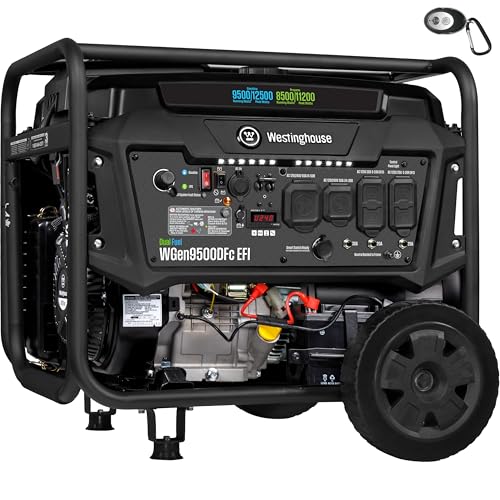
Electronic fuel injection (EFI) delivers reliable power delivery with improved throttle response and fuel efficiency. This unit provides 9,500 running watts on gasoline and 11,200 peak watts on propane, with a similar 6.6-gallon tank and a digital hour meter for maintenance tracking. It includes two GFCI 5–20R outlets, a 30A transfer switch outlet, and a 50A RV-ready outlet, all with rubber outlet covers for safety. The EFI system contributes smoother starting and consistent power output, which is beneficial for sensitive electronics and home backup scenarios requiring dependable operation across varying loads.
Westinghouse 12500 Peak Watt Home Backup Portable Generator with CO Sensor

This model pairs high peak power with a CO sensor for enhanced safety during operation. It offers 9,500 running watts and 12,500 peak watts, with a 6.6-gallon fuel tank and a fuel gauge. Outlets include two 5–20R 20A GFCI receptacles, a 30A transfer switch outlet, and a 50A RV-ready 14–50R outlet, plus a standard USB port setup. The engine uses a rugged cast iron sleeve with automatic low oil shutdown and a digital hour meter to assist with routine maintenance and reliability during extended outages.
Westinghouse 12500 Peak Watt Tri-Fuel Dual Fuel Generator

This three-fuel unit supports gasoline, propane, and natural gas with a 12500 peak watts and 9500 running watts on gasoline, plus 11200 peak/8500 running watts on propane and 7500 running watts on natural gas. It includes remote electric start, a 6.6-gallon tank with fuel gauge, and multiple transfer-switch-ready outlets: a 50A RV outlet, a 30A twist-lock, and two 20A GFCI outlets, all protected by rubber covers. A long-life engine, CO shutdown, and a digital hour meter support easy maintenance and safety during prolonged use.
Buying Guide: Key Purchase Considerations
Power needs and load profiles
Estimate the running watts for essential circuits, HVAC, refrigeration, and lighting. Consider peak watts for startup surges from air conditioners or motor-driven appliances. A unit with both high running watts and robust peak watts provides headroom for concurrent loads without overloading the generator.
Fuel versatility and availability
Dual-fuel or tri-fuel options offer flexibility when fuel supplies are limited. Propane and natural gas can be cleaner or more readily available in some regions, while gasoline delivers the best runtime per tank.
Safety features
CO sensors, automatic low-oil shutdown, and enhanced outlets with rubber covers improve safety. Look for transfer-switch readiness to simplify connecting to home electrical systems and avoid backfeeding.
Power quality and electronics protection
Inverter-based models with low total harmonic distortion (THD) protect sensitive devices like computers and medical equipment. If electronics safety matters, prioritize pure sine wave output and consistent voltage regulation.
Ease of use and maintenance
Remote electric start and key fob convenience save effort during outages. Digital hour meters and built-in fuel gauges streamline maintenance planning. Long runtimes reduce the frequency of refueling in critical periods.
Portability vs. stationary needs
Portable units offer flexibility for travel and job sites, while transfer switch-ready units integrate more seamlessly with home backup systems. Assess noise levels, weight, and ease of storage when selecting a model for residential use.
Warranty and support
Check manufacturer coverage, service networks, and availability of replacement parts. Reliability and long-term serviceability are vital for devices intended to run during extended outages.