Power outages can disrupt daily routines and compromise safety. This guide highlights top 12 kW standby generators ideal for American homes, combining reliability, remote monitoring, and efficient performance. Each option supports automatic transfer switching and fuels suitable for natural gas or propane. Read on to compare features, noise levels, and long‑term warranties to help you select a dependable backup power solution for storms, outages, and emergencies.
Summary of selected products:
| Product | Brand | Key Features | Fuel | Warranty |
|---|---|---|---|---|
| Generac Guardian 10kW with Transfer Switch | Generac Store | Mobile Link Wi-Fi, 100 Amp 16‑circuit transfer switch, weatherproof enclosure | Natural Gas or Propane | 5-Year Limited |
| Generac Guardian 10kW Silent Operation | Generac Store | Mobile Link Wi-Fi, Quiet-Test self‑test mode, 5‑year warranty | Natural Gas or Propane | 5-Year Limited |
| A-iPower 4600W RV-Ready Portable | A-iPower Store | Ultra-lightweight, CO sensor, clean inverter power | Gas | — |
| Honeywell 14kW Standby | Honeywell Store | PrecisionPower, low THD, Quiet-Test | Natural Gas or Propane | — |
| Kohler 14kW Standby with 200A TS | Kohler Store | Fast auto restoration, field-switchable fuel, outdoor transfer switch | Natural Gas or Propane | — |
Generac Guardian 10kW With Transfer Switch

This 10 kW standby generator provides whole‑house protection with a 100 Amp 16‑circuit transfer switch. The durable aluminum enclosure is designed for outdoor use, and the model features remote monitoring via Generac’s Mobile Link Wi‑Fi system. A key benefit is maintenance tracking and status alerts, ensuring you stay informed even when away from home. The unit is backed by a 5‑Year Limited Warranty, offering long‑term assurance on the transfer switch and generator performance.
Generac Guardian 10kW Silent Operation

Similar to the standard 10 kW option, this model emphasizes quieter operation with a Quiet‑Test self‑test mode. The generator runs at lower RPMs during testing, reducing noise and fuel consumption while preserving power quality. It offers Wi‑Fi monitoring for remote status checks and maintenance alerts, plus a 5‑Year Limited Warranty for dependable, long‑term use in home backup scenarios.
A-iPower 4600W RV‑Ready Portable Inverter
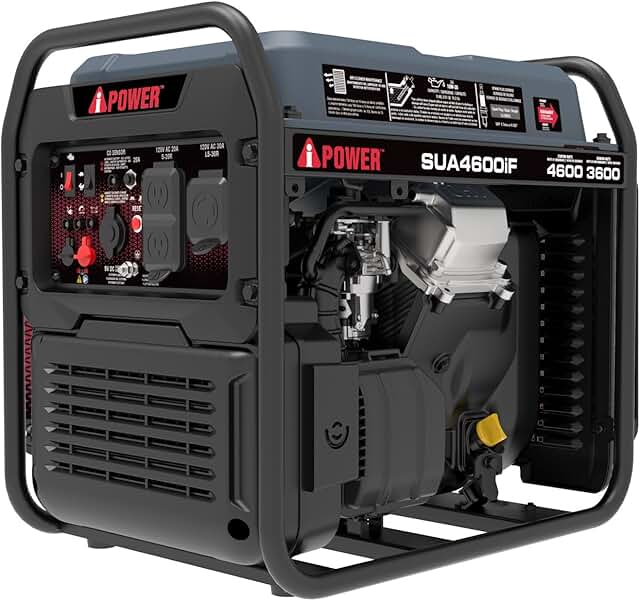
While not a full home standby, this portable inverter generator offers 4,600 starting watts and 3,600 running watts, ideal for RVs, tailgating, or small home backup needs. Weighing about 56 lbs, it provides portability for off‑grid use. Its inverter technology delivers a clean 3% THD output suitable for laptops, TVs, chargers, and other sensitive electronics, making it a versatile option for supplemental power during outages or outdoor activities.
Honeywell 14kW Home Standby

Honeywell’s 14kW standby model emphasizes power quality, with PrecisionPower technology delivering low harmonic distortion for clean operation of electronics and appliances. The system uses a purpose‑built G‑Force engine and features Quiet‑Test self‑test mode, which runs at a lower RPM for shorter, quieter tests and improved fuel efficiency. This model is designed for reliable operation during prolonged outages and supports smooth startup of high‑drain loads.
Kohler 14kW Standby With 200A TS

Kohler’s 14kW standby generator pairs fast automatic restoration with advanced voltage and frequency regulation, helping protect valuable electronics from surges. It can run on natural gas or propane and includes an RXT 200‑amp outdoor‑rated automatic transfer switch for seamless power transfer. The field‑switchable fuel option provides flexibility depending on your home’s fuel availability, making it a robust all‑weather backup system for larger homes.
Buying Guide
Key considerations help you choose the right 12 kW standby system for your home:
- Fuel type and availability: Natural gas provides constant fuel supply if connected to a utility line, while propane offers versatility in areas with gas line limitations. Some models can run on either fuel; confirm field switching capabilities and efficiency at each fuel type.
- Transfer switch capacity: A larger transformer like a 200‑amp or 100‑amp/16‑circuit setup supports more circuits and higher load levels. Assess your home’s essential circuits to determine the needed transfer switch rating.
- Remote monitoring: Wi‑Fi enabled systems (Mobile Link or similar) let you check status, receive alerts, and schedule maintenance remotely, which is helpful for proactive upkeep during outages or travel.
- Noise and maintenance: Quiet operation modes and lower RPM testing reduce noise and fuel use. Look for models with self‑test features that strike a balance between reliability and comfort in residential neighborhoods.
- Warranty and service: A longer warranty reflects durability and vendor support. Verify what is covered (engine, transfer switch, enclosure) and whether authorized service is readily available in your region.
- Installation considerations: Standby units require professional installation, proper venting, and weatherproof enclosures. Assess the ideal location for outdoor installation and ensure compliance with local codes and permits.
- Load management: For homes with high energy needs, pairing a 12 kW unit with a robust load management plan helps prevent nuisance tripping and ensures critical loads stay powered during outages.
- Maintenance plan: Regular oil changes, filter replacements, and transfer switch inspections extend the life of standby systems. Check if the manufacturer offers maintenance programs or authorized service partners.
These options illustrate a spectrum from full‑house standby systems to portable, lighter solutions. When evaluating, consider your home size, typical outage duration, climate, and the electrical layout of your circuits. This will help you pick a model that delivers reliable power during emergencies while balancing cost, noise, and fuel efficiency.