When choosing a 1000W pure sine wave inverter charger, look for clean, grid-like AC output, reliable automatic transfer during outages, and solid battery protection. The top picks below are designed for RVs, off-grid cabins, and emergency home backup, with buyers in mind who need steady power for essential appliances. Each product is evaluated for who it’s best for, plus practical limitations to consider before purchase. The quick reference table after the introduction helps compare key specs at a glance.
Product Comparison Snapshot
| Product | Brand | Output | Best For | Notes |
|---|---|---|---|---|
| ECO-WORTHY 1000W Inverter Charger | ECO-WORTHY | 1000W continuous, 2000W peak; 55A charger | RV and permanent off-grid setups requiring fast UPS | UPS within 20ms; robust protection |
| Jlouneo 1000W Pure Sine Wave Inverter | Jlouneo | 1000W continuous, 2000W peak | Mobile use; basic RV and camping power | Includes LCD, USB, Type-C, and remote |
| BELTTT 1000W Pure Sine Wave Inverter | BELTTT | 1000W continuous, 2000W peak | Home backup and off-grid with dual outlets | Intelligent LCD display; USB and dual sockets |
| Renogy 1000W Pure Sine Wave Inverter | Renogy | 1000W continuous, 2000W peak | Home and RV backup; USB port included | LED protection indicators; clean sine wave |
| LiTime 1000W Pure Sine Wave Inverter (2 Outlets) | LiTime | 1000W continuous, 2000W peak | Off-grid setups needing extra outlets | Built-in LCD for status; practical cooling |
ECO-WORTHY 1000W Pure Sine Wave Inverter Charger

- 1000W inverter with a 55A LiFePO4 battery charger 2-in-1 design.
- UPS function switches to battery power within about 20ms on grid loss.
- Pure sine wave output with protections for voltage, overload, overcurrent, and overtemperature.
Best for: RV owners and small off-grid systems that require a reliable automatic transfer and strong charging. It’s a strong all-in-one option when you want both energy conversion and charging in one device. Cautions: ensure your battery system is compatible with a 12V LiFePO4 setup to avoid mismatches, and plan for adequate ventilation due to charging currents.
Jlouneo 1000W Pure Sine Wave Inverter

- Converts 12V DC to 110V/120V AC with 1000W continuous and 2000W peak power.
- Low standby current around 0.7A, suitable for basic RVs and travel use.
- Includes LCD display, USB-A, Type-C, and remote controller for monitoring.
Best for: Travelers who need a compact, user-friendly inverter with versatile outlets and remote control. Cautions: verify battery voltage compatibility before purchase to avoid mismatches with non-12V systems.
BELTTT 1000W Pure Sine Wave Inverter

- 1000W continuous, up to 2000W peak; pure sine wave for sensitive electronics.
- Intelligent LCD displays input/output voltages and status; dual AC outlets and USB port.
- Designed for RVs, trucks, off-grid solar setups and home backup.
Best for: Users who want a robust inverter with an informative display and dual outlets for multiple devices. Cautions: check supported battery chemistry and ensure the unit’s cooling capacity matches load expectations during peak starts.
Renogy 1000W Pure Sine Wave Inverter

- Provides 1000W continuous, 2000W peak; 12V to 120VAC pure sine wave.
- LED indicators for under/over-voltage, over-temperature, overload, and short circuit; includes cooling features.
- Protects electronics with high-quality sine output and stable operation in RV and home backup scenarios.
Best for: Those seeking a well-known brand with straightforward indicators and reliable protection in RV or off-grid use. Cautions: ensure proper heat management, as continuous operation can rely on adequate airflow.
LiTime 1000W Pure Sine Wave Inverter (3 Outlets)
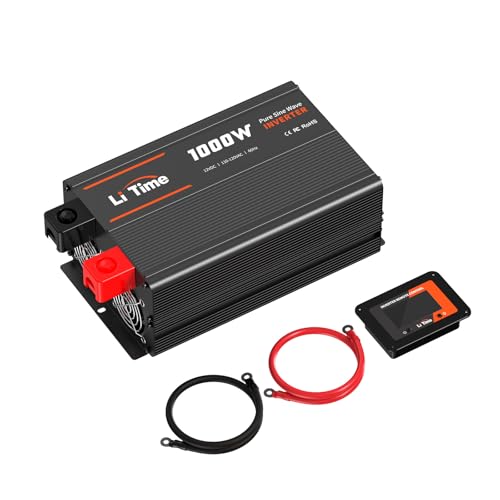
- 1000W continuous, 2000W peak; USB and Type-C options; LCD display for real-time status.
- Pure sine wave output for clean, grid-like power; suitable for sensitive electronics.
- Remote controller included; designed for RVs, trucks, camping and off-grid power.
Best for: Users who want multiple AC outlets and real-time monitoring in a compact inverter. Cautions: confirm your battery system voltage is 12V, and verify the cable gauge to support peak loads safely.
Buying Guide: Key Considerations For 1000W Pure Sine Wave Inverter Chargers
- Power needs and peak surge: Plan for a steady 1000W load with a higher peak if starting motors or compressors. Choose units rated for at least 2000W peak to avoid tripping on startup.
- Battery compatibility: Most of these devices assume 12V systems (AGM, GEL, Li-ion, LiFePO4). Confirm battery chemistry matches to avoid charging incompatibilities.
- UPS and transfer time: If grid power is essential, a fast UPS transition (often around 20ms) minimizes downtime for electronics. Verify the transfer mechanism matches your setup.
- Waveform quality: Pure sine wave output protects sensitive electronics and extends appliance life. Avoid modified sine solutions for delicate devices.
- Protection features: Look for over/under voltage, over-temperature, overload, short-circuit protection, and GFCI where applicable for safety.
- Cooling and ventilation: Higher loads generate heat. Check built-in fans or recommended ventilation to maintain performance and longevity.
- Outlets and ports: Consider the number of AC outlets and the presence of USB or USB-C ports if you plan to charge phones or small devices concurrently.
- Monitoring and controls: LCD displays, remote control, and easy-to-read indicators help with troubleshooting and maintenance in the field.
FAQ
- What does a 1000W pure sine wave inverter charger do?
A 1000W pure sine wave inverter converts 12V DC battery power to 110-120V AC with a smooth, grid-like waveform, while the charger section replenishes the battery bank. It protects sensitive devices and enables uninterrupted power during outages.
- Can I use these with a LiFePO4 battery?
Yes, most 12V 1000W inverter chargers support LiFePO4, AGM, GEL, and lithium chemistries. Always confirm the charger’s current and voltage settings match your battery specifications.
- Is 1000W enough for a microwave or refrigerator?
Many microwaves and refrigerators require more than 1000W to start. A unit rated for 2000W peak is often safer for startup surges, while steady loads may run on 1000W.
- Do these require professional installation?
Basic setups can be DIY if you follow safety guidelines, correct wiring, and fuse sizing. For vehicle integration or solar installs, professional assistance is advised.
- Are built-in USB ports useful for power banks and phones?
Yes. USB-C and USB-A ports offer convenient charging for devices without needing separate adapters, complementing AC power for mobile use.
- What should I consider before buying?
Evaluate total continuous power, peak surge capability, battery compatibility, cooling, and the presence of a reliable transfer switch. Also consider whether you need multiple outlets or just one dedicated AC circuit.