When severe weather or grid outages strike, a capable 10 kW portable generator can be a lifeline. This guide highlights five strong options that balance power, fuel flexibility, and user-friendly features. Each product section includes key specs to help compare performance, run time, and convenience so you can choose the right model for your home or campsite needs.
| Product | Power (Gas) | Power (Propane) | Fuel Type | Start Method |
|---|---|---|---|---|
| Westinghouse 12500 Watt Dual Fuel | 9500 R/W | 8500 R/W | Gas/Propane | Remote Electric / Recoil |
| WEN 11000-Watt DF1100T | 8300 | 7500 | Gas/Propane | Electric Start |
| Pulsar GD10KBN 10500W | 10500 | — | Gas/Propane | Electric Start |
| Generac 12500 Starting Watt Tri-Fuel | 12500 | — | Gas/Propane/Natural Gas | Electric Start |
| DuroMax XP13000EH | 13000 | — | Gas/Propane | Remote Electric Start |
Westinghouse 12500 Watt Dual Fuel Generator

The Westinghouse 12500 Watt Dual Fuel generator offers robust powering for home backup with gasoline and propane options. Key features include run-time up to 12 hours on a 6.6-gallon tank, a 457cc OHV engine, and a digital hour meter with a VFT display that shows voltage, frequency, and hours. It provides two GFCI outlets, a transfer switch ready 120V unit, and an RV-ready outlet for mobile power needs. Remote start with a key fob adds convenience during outages. This model blends power with safety features like rubber-covered outlets and automatic oil shutdown.
WEN 11,000-Watt DF1100T Dual Fuel
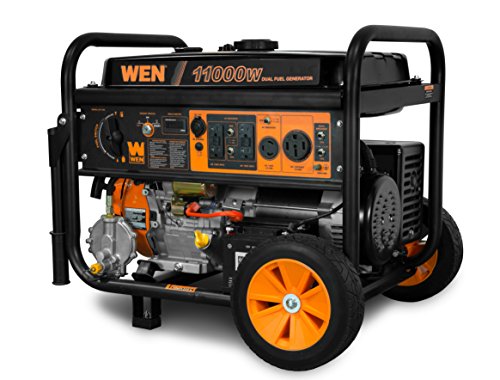
The WEN DF1100T switches between gasoline and propane with a simple dial, delivering 11,000 surge watts and 8,300 running watts on gas, or 9,500 surge and 7,500 running watts on propane. It provides 120V and 240V output options, making it suitable for transfer switches and emergency backup. An electric start powers the 457cc OHV engine, delivering quick power with minimal effort. This model balances power with practical transfer switch readiness for many home setups.
Pulsar GD10KBN 10500W Dual Fuel

The Pulsar GD10KBN emphasizes dual-fuel capability with a 10,500-watt peak output. It offers a compact form with wheel kit mobility and an electric start for fast activation. A digital multimeter is included to monitor voltage, frequency, and runtime, while RV readiness expands versatility for camping and tailgating. This model suits users who want dependable power on both gasoline and propane without compromising portability.
Generac 12,500 Starting Watt Tri-Fuel

Generac’s tri-fuel design accepts gasoline, propane, or natural gas, delivering 9,500 running watts and 12,500 starting watts. The push-button electric start is powered by a rechargeable battery for quick activation during emergencies. A 500cc engine and flexible fuel options emphasize long runtime and adaptability for different fuel availability. This model targets users seeking maximum fuel flexibility alongside easy operation and reliable backup power for mid-size homes.
DuroMax XP13000EH Dual Fuel Generator

The DuroMax XP13000EH provides 13,000 watts of power and can run on gasoline or propane. It features a remote electric start and is designed for whole-home backup and transfer switch readiness. Dual fuel capability adds convenience during fuel shortages, while a robust 670cc OHV engine underpins performance and durability. The model targets users who need higher wattage with flexible fuel sourcing for extended outages.
Buying Guide: Key Purchase Considerations
- Power needs and peak loads: Match the generator’s running and peak watts to the expected electrical load, including HVAC, water heater, sump pumps, and essential circuits.
- Fuel flexibility: Dual-fuel or tri-fuel units offer versatility during fuel shortages or cost shifts; consider the availability and cost of gasoline, propane, or natural gas in your area.
- Starting method and convenience: Electric start with a battery is easier in cold weather or during power outages; recoil starts are more budget-friendly but require effort.
- Runtime and fuel tank size: Longer run times reduce refueling interruptions; larger tanks add weight but improve endurance during outages.
- Outlets and safety features: Look for GFCI outlets, RV-ready receptacles, transfer-switch compatibility, and safety features like low-oil shutdown and CO detection if available.
- Noise and portability: Consider decibel levels and the weight when you need to move the unit between job sites or homes.
- Warranty and service support: A strong manufacturer warranty and a broad service network can protect your investment over time.
- Install considerations: If you plan a transfer switch, ensure the generator’s outlets and plug configurations align with your electrical panel and local codes.
Bottom line: For a reliable 10 kW to 13 kW range, prioritize models offering solid run-time, flexible fuel options, and user-friendly starting features. This selection covers a spectrum from portable and wheeled options to heavier-duty powerhouses designed for whole-home backup and outdoor use.