When outages hit or you’re off the grid, a reliable portable generator is essential. This guide highlights five top picks that balance power, fuel flexibility, and ease of use for American homes and outdoor adventures. Each product section includes key specs, fuel options, and runtime considerations to help you compare at a glance.
The following table provides a quick snapshot of the chosen models, including fuel type, peak and running wattage, and typical runtime. Use it to frame your purchasing decision before diving into in-depth details.
| Product | Fuel Options | Peak / Running Watts | Approx. Runtime |
|---|---|---|---|
| Westinghouse 14500 Peak Watt Tri-Fuel | Gas / Propane / Natural Gas | 14,500 / 11,500 (gas); 13,500 / 10,500 (propane); 12,000 / 9,500 (natural gas) | Up to 19 hours (gas); up to 7 hours (propane) |
| WEN 11,000-Watt DF1100T | Gas / Propane | 11,000 / 8,300 (gas); 9,500 / 7,500 (propane) | Varies with load |
| Generac GP8000E | Gas | ~7,715 starting / 6,000-8,000 running (varies with load) | Up to around 11 hours at 50% load |
| WEN DF8000X | Gas / Propane | 8,000 / 6,500 (gas); 7,200 / 5,850 (propane) | Depends on fuel and load |
| Champion 12,500-Watt Tri Fuel | Natural Gas / Propane / Gas | 12,500 / 10,000 (gas); 10,000 (natural gas); propane-rated values included | Representative run traces with CO Shield |
Westinghouse 14500 Peak Watt Tri-Fuel

This tri-fuel model is designed for power-heavy needs with three fuel options and a heavy-duty 550cc engine. It’s optimized for home backup, transfer switch readiness, and RV use. It offers long runtime on gasoline and versatility when you only have propane or natural gas available. A built-in fuel gauge helps monitor remaining energy, and the unit’s capacity supports larger appliances during outages.
WEN 11,000-Watt DF1100T
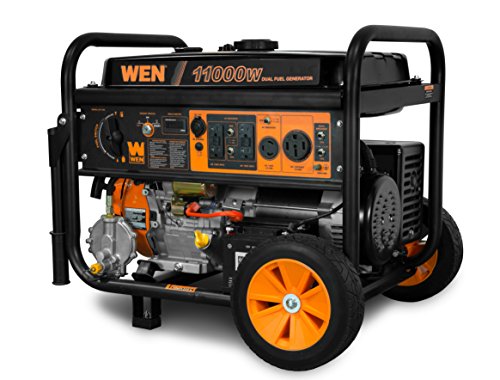
The DF1100T provides a dual-fuel design with an electric start for convenient operation. It smoothly transitions between gasoline and propane and supports 120V/240V output for transfer switches or whole-house backup. The 457cc engine paired with a key-start makes startup reliable, while dual voltage output expands its compatibility with higher-load circuits and RV setups.
Generac GP8000E Portable Generator

Generac’s GP8000E leverages PowerRush technology for stronger starting capacity and robust performance under load. It features an electric start for easy operation and a large-capacity steel tank with a fuel gauge for extended runtimes. This model is well-suited for emergency power, RV living, or outdoor work sites where reliable electricity is essential.
WEN DF8000X Dual Fuel

The DF8000X combines dual-fuel operation with an RV-ready profile and CO protection features. It’s designed to support longer outages with a balance of power, portability, and safety. The unit is compatible with transfer switches and home backup scenarios, delivering dependable electricity for essential appliances.
Champion 12,500-Watt Tri Fuel

Champion’s tri-fuel model offers natural gas, propane, or gasoline options and ships with fuel hoses for natural gas and propane. It includes an electric start, a built-in Intelligauge for monitoring voltage and runtime, and CO Shield safety to shut off the unit if CO levels rise. This combination supports versatile power in emergencies and on outdoor jobsites.
Buying Guide
Key purchase considerations help you choose a generator that matches your needs without overpaying for features you won’t use. Consider fuel availability, power requirements, noise level, and ease of startup when evaluating models.
- Power needs: List essential devices (refrigerator, sump pump, well pump, HVAC) and total their running watts. Choose a generator with a comfortable margin above peak demands to avoid overworking the engine.
- Fuel flexibility: Tri-fuel units provide the most versatility in areas with fluctuating fuel availability but may be heavier and costlier. Dual-fuel and single-fuel options suit straightforward setups.
- Starting method: Electric start is convenient, especially for frequent outages, but ensure the included battery and charging method meet your maintenance routine.
- Runtime and tank size: Larger tanks extend runtime at moderate loads. If you anticipate long outages, prioritize models with higher tank capacity and efficient engines.
- Safety features: Look for CO sensors, automatic shutoff, and proper ventilation requirements. RV-ready configurations support 120V/240V operation for versatile use.
- Portability vs. baseline power: Heavier units may require wheels and a strong backup plan for transport. Balance mobility with steady power output for your home or campsite.
- Transfer switch readiness: If you plan to back up a home circuit, select a generator with a compatible transfer switch interface for seamless switching.
When selecting among these models, align your choice with how you plan to use the generator: full home backup, weekend camping, or RV life. For larger homes or frequent outages, multi-fuel options with higher starting wattage provide the most coverage. For lighter, portable needs, compact dual-fuel units offer dependable energy on the go without excessive weight. Safety and maintenance considerations, such as CO monitoring and routine oil changes, ensure longevity and safe operation over time.